Parenting & Feeding Guide – Q&A
Common Feeding Concerns
- My baby keeps spilling milk. What should I do?Check if the nipple flow matches your baby’s age, ensure it’s fitted tightly, and make sure your baby’s feeding position is correct.
- My baby refuses to drink milk. Any tips?Try different nipple shapes or materials, adjust the bottle temperature, or transition gradually with breastfeeding + bottle combination.
Cleaning & Sterilization
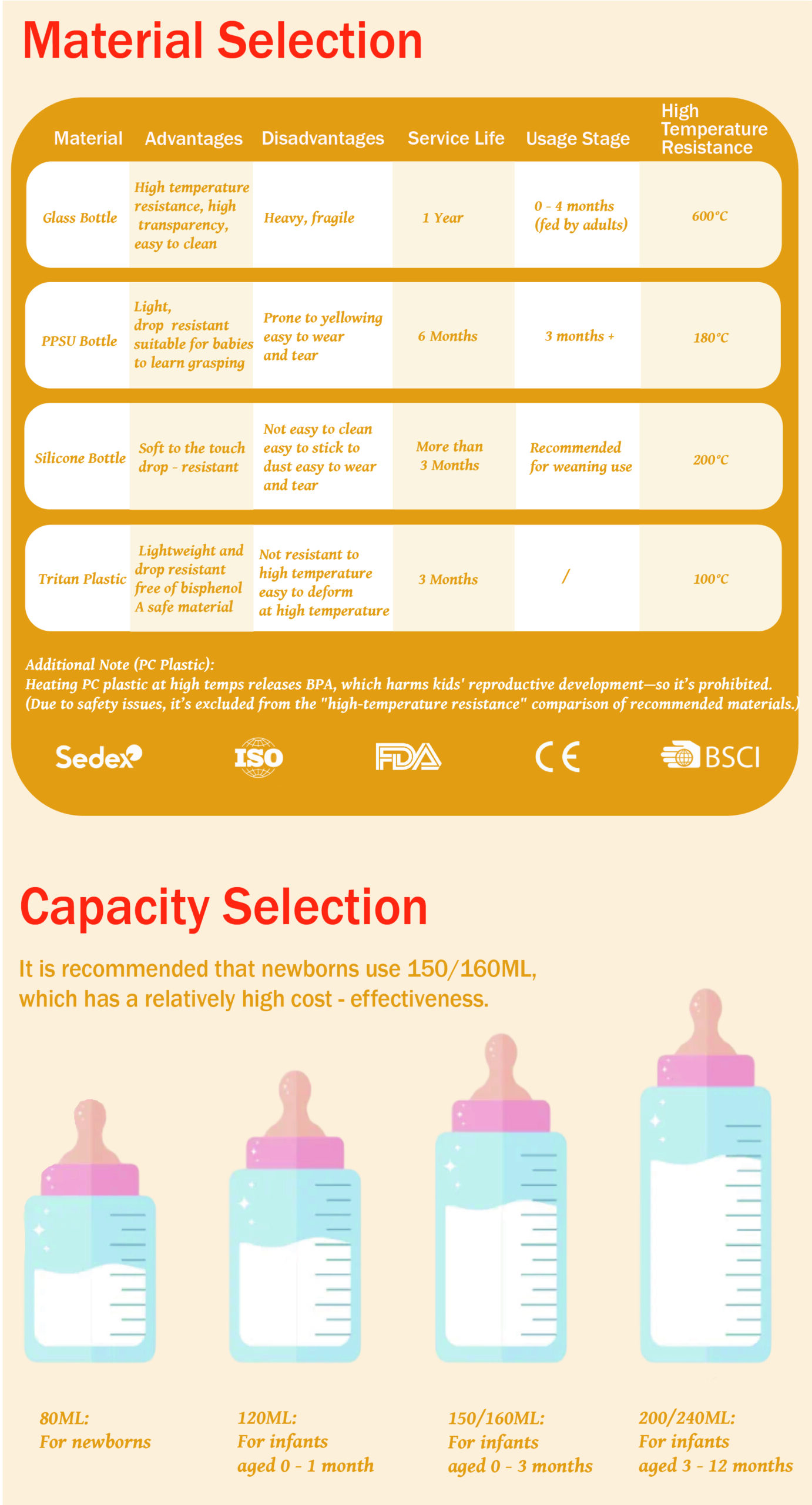
- How should I clean and sterilize bottles, nipples, and sippy cups?Newborn stage: Boil or steam sterilize daily 6 months+: Warm water + bottle brush cleaning is sufficient PPSU: Dishwasher safe on top rack PP: Hand wash recommended to avoid fogging and aging
- How do I choose the right bottle or straw brush?Pick soft, long brushes that reach the bottle bottom and straw ends without shedding bristles.
Baby Tableware & Feeding Tools
- When can my baby start using utensils?At 6 months, when starting solids. Begin with soft spoons and baby bowls to encourage hand-eye coordination and grip practice.
- PPSU vs PP vs Stainless Steel utensils – which is best?PPSU: Light, durable, safe for toddlers PP: Lightweight, affordable Stainless Steel: Durable, heat-resistant, good for older babies
Training Cups & Sippy Cups
- When can my baby start using a sippy cup?Around 6 months, when introducing solids. Start with spout cups or anti-leak cups, then transition to straw cups and finally open cups.
- What is a gravity ball straw cup, and do I need one?Gravity ball cups allow your baby to drink from any angle without spilling. Ideal for beginners learning to drink independently.
Bottles & Nipples
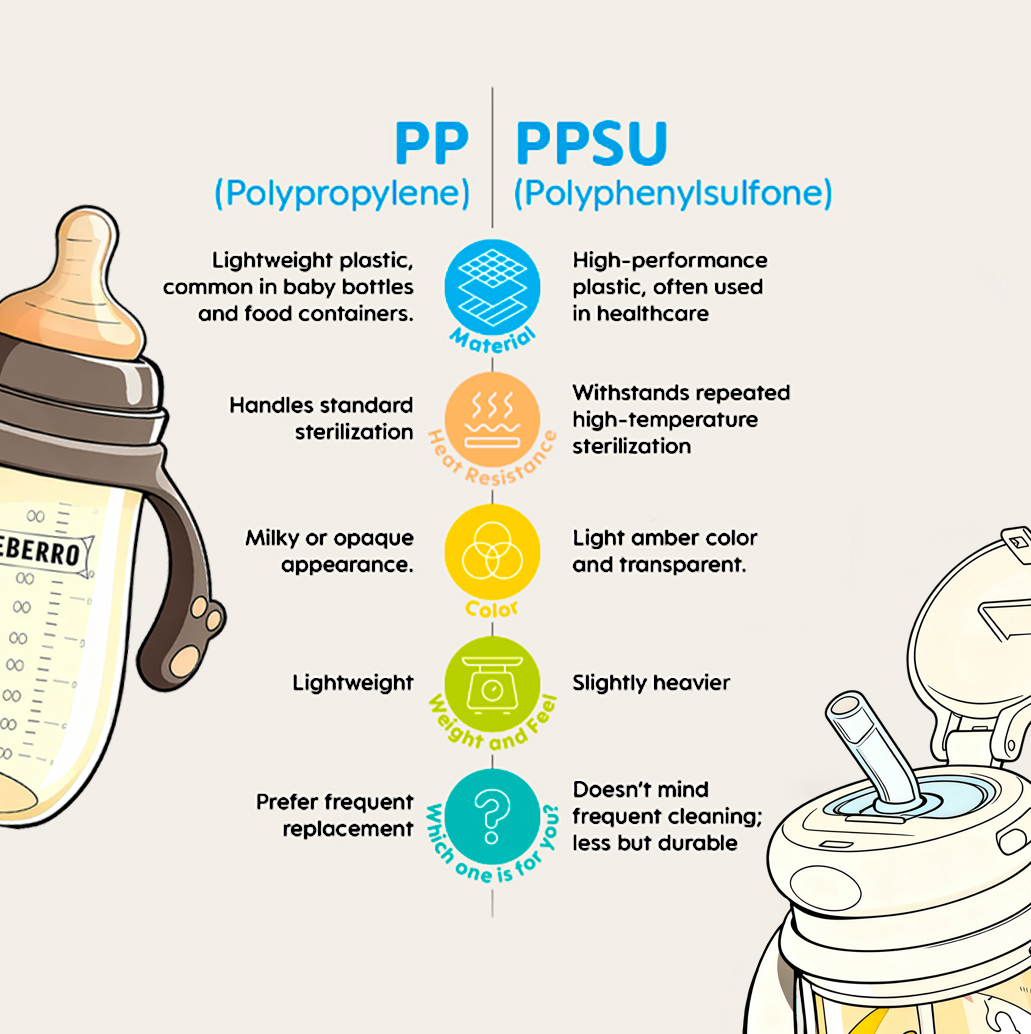
- What’s the difference between PPSU and PP bottles?PPSU bottles are more heat-resistant, durable, and less likely to yellow over time. PP bottles are lightweight and budget-friendly but can wear out faster under high temperatures.
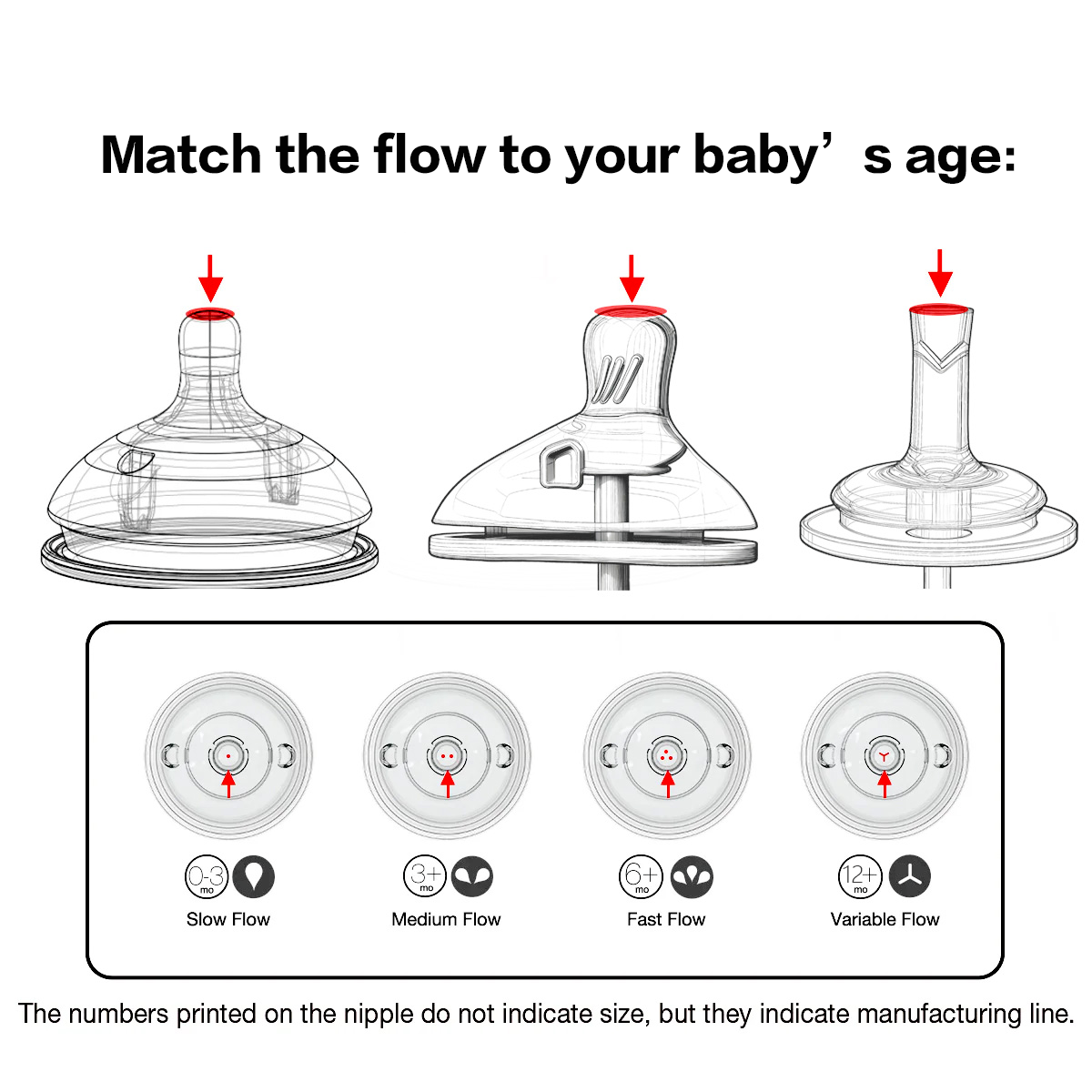
- How do I choose the right nipple flow?Match the flow to your baby’s age: S (0–3M): Slow flow M (3–6M): Medium flow L (6M+): Fast flow Variable Flow
- Can I heat bottles in the microwave?PPSU bottles can be warmed in a water bath, but avoid direct microwave heating of milk. PP bottles are not recommended for microwaving as they may warp or degrade.
Bottles & Nipples
What’s the difference between PPSU and PP bottles?
PPSU bottles are more heat-resistant, durable, and less likely to yellow over time. PP bottles are lightweight and budget-friendly but can wear out faster under high temperatures.

How do I choose the right nipple flow?
Match the flow to your baby’s age:
S (0–3M): Slow flow
M (3–6M): Medium flow
L (6M+): Fast flow
Variable Flow

Can I heat bottles in the microwave?
PPSU bottles can be warmed in a water bath, but avoid direct microwave heating of milk. PP bottles are not recommended for microwaving as they may warp or degrade.
Training Cups & Sippy Cups
When can my baby start using a sippy cup?
Around 6 months, when introducing solids. Start with spout cups or anti-leak cups, then transition to straw cups and finally open cups.
What is a gravity ball straw cup, and do I need one?
Gravity ball cups allow your baby to drink from any angle without spilling. Ideal for beginners learning to drink independently.
Baby Tableware & Feeding Tools
When can my baby start using utensils?
At 6 months, when starting solids. Begin with soft spoons and baby bowls to encourage hand-eye coordination and grip practice.
PPSU vs PP vs Stainless Steel utensils – which is best?
PPSU: Light, durable, safe for toddlers
PP: Lightweight, affordable
Stainless Steel: Durable, heat-resistant, good for older babies
Cleaning & Sterilization
How should I clean and sterilize bottles, nipples, and sippy cups?
Newborn stage: Boil or steam sterilize daily
6 months+: Warm water + bottle brush cleaning is sufficient
PPSU: Dishwasher safe on top rack
PP: Hand wash recommended to avoid fogging and aging
How do I choose the right bottle or straw brush?
Pick soft, long brushes that reach the bottle bottom and straw ends without shedding bristles.
Common Feeding Concerns
My baby keeps spilling milk. What should I do?
Check if the nipple flow matches your baby’s age, ensure it’s fitted tightly, and make sure your baby’s feeding position is correct.
My baby refuses to drink milk. Any tips?
Try different nipple shapes or materials, adjust the bottle temperature, or transition gradually with breastfeeding + bottle combination.